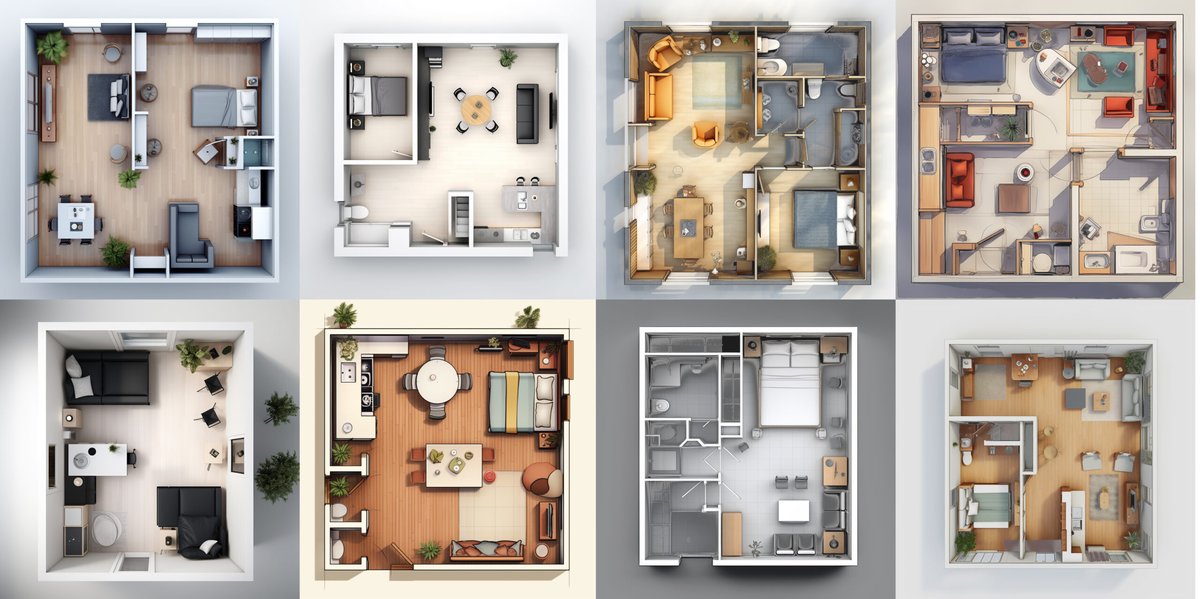
Imagine effortlessly sketching out a vision for your dream home or a client's commercial space, then watching an AI instantly bring it to life as a detailed floor plan. That's the magic of AI floor plan generators. Yet, even the most advanced tools can hit a snag. Whether you're struggling with a stubborn save error or wondering how to coax the perfect design from your digital assistant, effective troubleshooting and smart usage tips are your best friends. This comprehensive guide will equip you with the knowledge to overcome common hurdles and maximize the potential of your AI floor plan creator, ensuring your design process remains as smooth and intuitive as possible.
At a Glance: Your AI Floor Plan Troubleshooting Checklist
- Check Your Connection & Login: Always start by verifying a stable internet connection and confirming you're logged into your account.
- Browser Health Matters: Ensure your browser is up-to-date and clear its cache and cookies regularly.
- Input Garbage, Get Garbage: The AI is only as good as the information you feed it. Be precise with measurements and clear with your design goals.
- Don't Be Afraid to Iterate: Use the AI's flexibility to experiment with multiple layouts and refine your vision.
- Leverage Customization: Treat AI-generated plans as a starting point, then use the tools to personalize every detail.
- Seek Community Support: If stuck, online forums and support resources often hold the answers.
- AI Enhances, Doesn't Replace: Remember, these tools are powerful assistants, not substitutes for human creativity and judgment.
The Promise (and the Potholes) of AI Floor Plans
Traditional floor plan creation is a labor of love – and often, frustration. It's time-consuming, prone to manual errors, and a real headache when revisions roll in. Enter AI floor plan generators: revolutionary tools that leverage machine learning and computer vision to transform rough ideas into polished layouts. They automate repetitive tasks, reduce human error, and offer incredible flexibility for customization. This efficiency allows designers, real estate professionals, and homeowners to focus on the creative vision rather than the tedious drawing.
However, even with these incredible benefits, challenges can arise. Technology, by its nature, isn't always foolproof. Sometimes the software doesn't behave as expected, or you might find yourself struggling to translate your creative ideas into the AI's language. Understanding these potential roadblocks and knowing how to navigate them is key to truly seamless design.
First Line of Defense: Common Technical Troubleshooting
Few things are more frustrating than pouring your creativity into a design only to have the software fail on you. The most common technical glitches often boil down to a few basic culprits. Let's walk through how to address them systematically.
Battling the Dreaded "Failed to Save" Error
If your hard work isn't sticking, here's a logical path to follow, directly addressing the issues flagged by many users and support teams, including those for popular platforms like Homestyler.
1. Internet Connection: The Foundation of Digital Work
It sounds obvious, but a shaky internet connection is often the silent saboteur. AI floor plan generators, especially browser-based ones, rely heavily on constant communication with remote servers to process inputs and save your progress.
- Check Your Wi-Fi/Ethernet: Is your connection stable? Try loading another website or running a speed test.
- Restart Your Router: A quick reset can often clear up minor network hiccups.
- Switch to a Different Network: If possible, try connecting to a mobile hotspot or another Wi-Fi network to rule out issues with your primary connection.
2. Account Login: Are You Really You?
Many features, especially saving and accessing cloud storage, are tied to your user account. If you're not properly logged in, or if your session has timed out, the software might behave erratically.
- Verify Your Status: Look for your profile icon or name. If it indicates you're logged out, log back in.
- Refresh Your Session: Sometimes simply refreshing the page can re-establish your login session without losing your work (though saving first is always ideal).
- Multiple Devices: If you use a free AI floor plan generator across several devices, ensure you're consistently logged into the correct account on each.
3. Browser Compatibility & Health: Your Digital Canvas
Web browsers are complex pieces of software, and they can sometimes clash with specific applications or become bogged down themselves.
- Update Your Browser: Outdated browsers can lack the necessary features or security protocols for modern web applications. Ensure Chrome, Firefox, Edge, or Safari is fully updated.
- Clear Cache and Cookies: These stored files can sometimes become corrupted or outdated, causing conflicts. Clearing them can resolve many strange browser behaviors.
- How-To (General): Go to your browser's settings, find "Privacy and security" or "History," and look for options to clear browsing data, specifically cache and cookies.
- Try a Different Browser: If all else fails, open your AI floor plan generator in an entirely different browser. This helps determine if the issue is browser-specific or application-wide.
4. Device Issues: A Fresh Start
Sometimes, the problem isn't the software or the browser, but your device itself.
- Restart Your Device: A full restart can clear temporary glitches in your operating system or device memory.
- Check System Resources: Ensure your computer isn't running too many demanding applications simultaneously, which can slow down performance and lead to saving failures.
5. When All Else Fails: Seeking External Support
If you've exhausted these basic troubleshooting steps and problems persist, it's time to tap into broader resources.
- Consult Support Resources: Most reputable AI floor plan generators have extensive help centers, FAQs, or dedicated support documentation.
- Explore Community Forums: Platforms like Homestyler often have vibrant user communities where others have encountered – and solved – similar issues. Sharing your experience there can often lead to quicker fixes.
- Contact Customer Support: If it's a persistent, unique issue, reaching out directly to the software provider's customer support team is the next logical step. Provide as much detail as possible about your problem and the steps you've already taken.
Mastering Your Inputs: Fueling Smart AI Generations
Technical glitches aside, sometimes the "trouble" is simply getting the AI to understand your vision. AI floor plan generators are powerful, but they operate on logic. The better and clearer your inputs, the more accurate and useful the output will be. Think of the AI as a brilliant, but literal, assistant.
1. Precision Matters: Accurate Measurements & Specifications
This is perhaps the most critical input. Garbage in, garbage out applies directly here.
- Double-Check Everything: Before you even open your AI floor plan generator, ensure all your room dimensions, wall thicknesses, and structural elements are measured precisely. A few inches off can drastically alter the flow and fit of furniture.
- Define Fixed Elements: Clearly mark immovable objects like support columns, existing plumbing, or non-load-bearing walls. This helps the AI work within realistic constraints.
- Use Consistent Units: Stick to either imperial or metric units throughout your input to avoid confusion.
2. Visual Cues: Sketches and Images Speak Volumes
Many AI generators can interpret visual inputs to guide their creation.
- Rough Sketches: A basic hand-drawn sketch, even if crude, can give the AI a foundational understanding of your desired layout, adjacencies, and general flow. Focus on relative positioning rather than perfect scale.
- Reference Photos/Plans: Uploading existing photos of the space or even inspirational images of desired aesthetics (e.g., "open-concept living room") can provide valuable context for the AI.
3. Text Prompts: The Language of AI Design
Just like with AI image generators, clear and descriptive text prompts are incredibly powerful.
- Be Specific, But Not Overly Prescriptive: Instead of "make a living room," try "create an open-concept living room with a cozy fireplace, ample natural light, and a dedicated reading nook."
- Specify Adjacencies: "Place the kitchen adjacent to the dining area," or "ensure the master bedroom has direct access to a private bathroom."
- Define Room Functions: Clearly label areas and their intended use (e.g., "home office," "guest bedroom," "laundry room").
- Incorporate Style Elements: "Modern minimalist kitchen," "rustic farmhouse bathroom," or "industrial loft aesthetic."
4. Material and Style Preferences: Guiding the Aesthetic
Some advanced AI tools allow you to specify materials and design styles, influencing the generated floor plan's visual presentation and even the placement of fixtures.
- Specify Finishes: Mention preferences like "hardwood floors," "marble countertops," or "exposed brick walls."
- Lighting Considerations: Indicate where you'd like natural light or specific types of artificial lighting (e.g., "large windows facing south," "recessed lighting throughout").
Beyond Generation: Refining and Iterating Your Design
The initial AI-generated floor plan is rarely the final masterpiece. Its true power lies in its ability to provide a flexible starting point, allowing you to rapidly iterate and refine.
1. Leverage Customization Tools: Your Design Playground
The "flexibility and customization" benefit of AI tools is huge. Don't settle for the first draft.
- Drag-and-Drop Elements: Most platforms offer intuitive interfaces to move walls, add doors and windows, and place furniture.
- Modify Dimensions: Easily adjust room sizes, wall lengths, and the scale of objects.
- Experiment with Templates: Utilize the software's pre-designed templates as a springboard for new ideas, then customize them to your heart's content. Trying out different base layouts with a free AI floor plan generator can spark unexpected inspiration.
2. Experiment with Various Layouts: The "What If" Machine
One of AI's greatest strengths is its ability to generate multiple options quickly. Don't be afraid to try wildly different approaches.
- Generate Multiple Variations: Input the same core requirements but tweak a few parameters (e.g., "L-shaped kitchen" vs. "U-shaped kitchen") to see diverse outputs.
- Play with Flow: Observe how different layouts impact the movement and functionality of the space. AI helps visualize flow and functionality like never before.
3. The Power of Feedback: Collaborative Creation
Design is rarely a solo endeavor. AI tools enhance collaboration, making it easier to gather insights.
- Share Early and Often: Share your AI-generated plans with clients, colleagues, or even trusted friends and family.
- Solicit Specific Feedback: Ask targeted questions: "Does this living room feel spacious enough?" "Is the kitchen triangle efficient?"
- Iterate Based on Input: Use the feedback to guide your revisions, leveraging the AI to quickly implement changes. The ease of revision is a huge time-saver.
4. Collaboration Made Easy: Real-Time Sharing
Many AI floor plan platforms offer features that simplify sharing and feedback.
- Cloud-Based Sharing: Share direct links to your projects, allowing others to view or even co-edit in real time.
- Annotate and Comment: Use built-in tools for comments or annotations directly on the plan to streamline communication. This significantly simplifies communication with clients and colleagues.
Ethical & Practical Considerations: Choosing Your AI Ally Wisely
While AI floor plan generators offer undeniable advantages, it's crucial to approach them with a discerning eye. Like any powerful tool, understanding its limitations and ensuring responsible use is paramount.
1. Data Security & Privacy: Guarding Your Blueprints
You're entrusting your design ideas, and potentially sensitive project details, to a third-party platform.
- Choose Reputable Providers: Prioritize well-established software companies with clear privacy policies and robust security measures.
- Understand Data Usage: Read the terms of service. How will your data be used? Is it shared with third parties?
- Secure Your Account: Use strong, unique passwords and enable two-factor authentication if available.
2. Understanding AI's Role: An Enhancement, Not a Replacement
This is a fundamental truth: AI floor plan generators are powerful tools to enhance human creativity and expertise, not to replace the nuanced skills of a designer or architect.
- Context and Nuance: AI lacks the human ability to fully grasp emotional context, site-specific challenges (like unique zoning laws or complex structural issues), or a client's unspoken desires.
- A Starting Point: View AI-generated plans as highly advanced initial drafts. They save immense time on conceptualization but require human oversight for final approval, structural integrity, and aesthetic finesse. You might use a free AI floor plan generator for a quick layout, then pass it to an architect for refinement.
3. The Human Touch: Critical Review and Expert Oversight
Ultimately, the best designs blend AI efficiency with human insight.
- Critical Review: Always critically review AI-generated plans for feasibility, adherence to building codes, and practical functionality.
- Add Personality: AI can be functional, but humans add soul. Incorporate unique design elements, material palettes, and personal touches that make a space truly sing.
- Professional Expertise: For complex projects, always consult with licensed architects, structural engineers, or interior designers. AI can't replace their professional judgment or legal responsibilities.
Common Questions & Smart Answers
Here are quick answers to some frequently asked questions about AI floor plan creation:
Q: Can AI floor plan generators handle complex multi-story designs?
A: Many advanced AI tools can create multi-story plans, often allowing you to stack and connect different levels. However, detailed structural considerations still require human engineering expertise.
Q: How accurate are the dimensions generated by AI?
A: The accuracy depends almost entirely on the precision of your initial inputs. If you provide exact measurements, the AI will generate plans with corresponding accuracy. It's crucial to double-check AI outputs against your original data.
Q: Do I need design experience to use these tools effectively?
A: Not necessarily. AI generators are designed to be user-friendly, automating much of the technical drawing. However, a basic understanding of spatial design principles (e.g., traffic flow, furniture placement) will help you make better decisions and provide clearer inputs.
Q: What if the AI generates something completely different from what I envisioned?
A: This usually points to unclear or insufficient inputs. Refine your text prompts, add more visual references, or break your design down into smaller, more specific requests. Don't be afraid to regenerate and experiment.
Q: Are free AI floor plan generators reliable for professional use?
A: Free versions can be excellent for personal projects, initial conceptualization, or learning the software. For professional work, consider paid versions or premium features that often offer more advanced tools, higher resolution outputs, and better support. A free AI floor plan generator is a fantastic starting point to explore capabilities.
Your Blueprint for Success: Next Steps in AI Floor Plan Creation
Navigating the world of AI floor plan creation doesn't have to be daunting. With these troubleshooting tips and best practices, you're well-equipped to tackle common technical snags and elevate your design process. Remember, the goal isn't to become a robot, but to empower your creativity with cutting-edge technology.
Start by ensuring your digital workspace is optimized – stable internet, updated browser, clear cache. Then, focus on clear, precise inputs, whether through measurements, sketches, or descriptive text prompts. Don't hesitate to experiment, iterate, and leverage the collaborative features to gather feedback. Finally, choose reputable tools, understand AI's supportive role, and always infuse your designs with your unique human touch. Your next seamless floor plan is just a few smart clicks away.