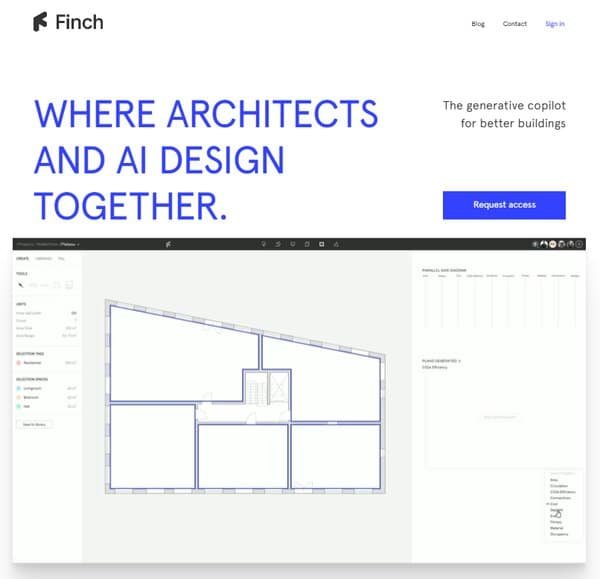
Few things are more exciting than planning a new space, whether it's sketching your dream home, optimizing an office layout, or reimagining a single room. For decades, this process involved endless manual drawing, expensive software, or costly professional help. But what if you could visualize your ideas in seconds, not days? That's precisely what Getting Started with AI Floor Plan Generators offers: the power to transform concepts into detailed, professional layouts with unprecedented ease and speed.
Forget complex blueprints and confusing design programs. AI floor plan generators are revolutionizing how we approach spatial planning, making high-quality design accessible to everyone.
At a Glance: What You'll Learn
- Effortless Design: Generate detailed floor plans in seconds, not hours or days.
- No Experience Needed: Intuitive tools mean you don't need design or technical skills.
- Unleash Creativity: Customize dimensions, room types, styles, and even unwanted areas.
- High-Quality Results: Get professional-grade 2D, 3D, and technical plans.
- Versatile Uses: Perfect for homes, offices, renovations, real estate, and creative projects.
- Smart Starting Point: AI creates a solid foundation you can refine or export.
Your New Design Assistant: What Are AI Floor Plan Generators?
Imagine having an architect, an interior designer, and a lightning-fast draftsperson all rolled into one, accessible from your web browser. That's essentially what an AI floor plan generator is. These advanced tools leverage cutting-edge artificial intelligence algorithms to effortlessly design detailed floor plans, transforming your abstract ideas into precise, visually appealing layouts in mere minutes or even seconds.
They eliminate the need for manual drawing or wrestling with complex, traditional CAD software. Instead, you provide a few key details, and the AI takes over, crafting custom plans tailored to your specifications. It’s about democratizing design, putting powerful visualization capabilities directly into your hands, whether you're a seasoned professional or someone simply trying to plan their next home improvement project.
Why Bother with AI? The Game-Changing Benefits You'll Love
The shift from manual design to AI-powered generation isn't just a novelty; it's a fundamental improvement in efficiency and accessibility. Once you try it, you'll wonder how you ever managed without it. Here’s why these tools are quickly becoming indispensable:
- Blazing Speed: Time is money, and AI floor plan generators understand this. You can get a complete, detailed floor plan in as little as 3-5 seconds. This dramatically speeds up the design process, saving you hours or even days compared to traditional methods. Imagine iterating through dozens of layout ideas in the time it used to take to sketch just one.
- Unmatched Accessibility: No prior design experience? No problem. These tools boast intuitive user interfaces, meaning you don't need technical skills or complex prompting knowledge to get started. If you can type in a few numbers and click a button, you can generate a professional floor plan. This makes them a fantastic way to design your own home for free without a steep learning curve.
- Deep Customization at Your Fingertips: While lightning-fast, AI generators are far from generic. You have significant control to specify dimensions, room types, architectural styles, and the number of rooms. Want a gigantic master bedroom and tiny guest rooms? You can tell the AI exactly that, even setting unwanted areas to zero.
- High-Quality, Professional Output: Don't confuse speed with low quality. These generators produce detailed, precise floor plans suitable for professional use, client presentations, or personal visualization. Most support various output styles, including technical drawings, clear 2D layouts, and immersive 3D formats, giving you exactly what you need.
- Cost-Effectiveness: Many AI floor plan generators offer free tiers or unlimited generation, making them an incredibly budget-friendly option. This means you can experiment and explore ideas without worrying about software licenses or hourly design fees. You can find a robust Free AI floor plan generator that offers remarkable capabilities.
- Flexibility for Iteration: The speed and ease of use foster rapid iteration. You can experiment with countless different layouts and configurations, visualizing each change instantly. This flexibility is invaluable for refining ideas and ensuring your final design is truly optimal for your needs.
The Simple 3-Step Process: How AI Floor Plan Generators Work
Getting started with an AI floor plan generator is refreshingly straightforward. Most platforms follow a similar, intuitive workflow, designed to get you from concept to blueprint in just a few clicks. Think of it as telling a very smart assistant exactly what you want, then letting them do all the heavy lifting.
Step 1: Input Your Space Details
This is where you give the AI the basic parameters of your project. Don't worry about being an expert; simple information goes a long way.
- Total Area: Start with the overall size. This could be the total square footage of your home or office, or simply a rough estimate of the footprint you’re working with.
- Building Type: Is it a house, an apartment, an office, or something more unique? Selecting the building type helps the AI understand common conventions and design principles relevant to that space.
- Room Requirements: Specify the number and types of rooms you need. For example: "3 bedrooms, 2 bathrooms, open-plan living/dining, kitchen, study." You can even get specific about the relative sizes or general placement if the tool allows.
Step 2: Customize Your Preferences
This is where you add your personal touch and fine-tune the design. The more detail you provide, the better the AI can tailor the output to your vision.
- Architectural Style: Do you prefer modern, traditional, industrial, or minimalist? Choosing a style helps the AI incorporate relevant design elements and spatial arrangements.
- Specific Room Needs: Beyond just "kitchen," you might specify "large open kitchen with island" or "compact galley kitchen." For bathrooms, you might mention "master bath with double vanity and walk-in shower."
- Output Style: Decide how you want to see your plan. Options typically include:
- Technical (Schematic): Clean lines, dimensions, and structural elements, often used for construction.
- 2D Layout: A top-down view showing room placement, furniture suggestions, and traffic flow.
- 3D Visualization: An immersive view that helps you truly envision the space as if you were walking through it.
- Other Preferences: Some advanced tools let you specify details like window placement, door swings, or even areas to avoid, giving you a comprehensive virtual home designer at your command.
Step 3: Generate & Download Your Masterpiece
Once you've inputted your details and customized your preferences, the hard part is over.
- Click to Generate: Hit the "Generate" button, and watch the AI work its magic. In a matter of seconds, your custom floor plan will appear on screen.
- Review and Refine: Most tools allow you to make adjustments directly or generate new variations if the first attempt isn't quite right. This iterative process is incredibly powerful.
- Download for Your Projects: Once satisfied, you can download your AI-crafted floor plan in various formats (e.g., PDF, JPG, PNG, sometimes even CAD-compatible files) to integrate into your projects, share with clients, or simply keep for your own visualization.
Unleash Your Vision: Versatile Use Cases for AI Floor Plan Generators
The utility of AI floor plan generators extends far beyond just basic room layouts. Their speed, flexibility, and high-quality output make them incredibly versatile across numerous applications, serving professionals and enthusiasts alike.
Home & Residential Planning
If you’re wondering how to design a house from scratch or just planning a small remodel, these tools are your first stop.
- Houses, Apartments, & Condos: Quickly generate layouts for entire residential properties, complete with room dimensions and optimal placement for living areas, bedrooms, and utility spaces.
- Interior Design Mockups: Visualize furniture placement, evaluate room flow, and experiment with different aesthetic arrangements to enhance your interior design planning. This is perfect if you’re trying to use an online room planner for free to get a quick visual.
- Custom Room Layouts: Focus on individual spaces. Want to redesign your kitchen? Get ideas from free kitchen design software within seconds. Planning a bathroom renovation? Access free bathroom design software capabilities to experiment with layouts for fixtures and storage.
Commercial & Business Spaces
For businesses, efficient layouts are crucial for productivity and customer experience.
- Offices & Workspaces: Design efficient floor plans that optimize workflow, collaboration, and individual productivity for various office configurations, from open-plan to private offices.
- Retail Stores & Restaurants: Create inviting and functional layouts that guide customer flow, maximize display space, or ensure smooth service operations.
- Other Business Environments: From medical clinics to salons, AI can help design layouts that meet specific operational and regulatory requirements.
Renovation & Real Estate
These tools are invaluable for visualizing change and marketing properties.
- Renovation Planning: Visualize potential changes, expansions, or reconfigurations for existing properties. See how moving a wall or adding an extension would impact the overall flow and functionality of your space.
- Real Estate Marketing: Generate compelling visual aids for property listings. Help potential buyers or renters easily envision the space and its possibilities, making listings more attractive and informative.
Creative & Niche Projects
Beyond traditional architectural uses, AI floor plan generators spark creativity.
- Tabletop Games & Virtual Environments: Quickly generate unique maps and layouts for role-playing games, video game levels, or virtual reality simulations, adding depth and realism to your creative worlds.
- Creative Storytelling: Visualize settings for novels, short stories, or screenplays, helping authors and creators map out character movements and plot points within their fictional environments.
Capabilities & Realistic Expectations: What AI Does (and Doesn't Do)
AI floor plan generators are powerful tools, but like any technology, understanding their strengths and limitations is key to maximizing their value. They deliver impressive, well-proportioned layouts that are excellent starting points.
What AI Floor Plan Generators Excel At:
- Rapid Visualization: Their primary superpower is speed. You can get a fully formed plan in seconds, allowing for quick ideation and exploration of countless possibilities.
- Intuitive Layouts: The AI is trained on vast datasets of architectural designs, meaning it generally produces aesthetically pleasing and functionally sound room configurations. It understands traffic flow, standard room sizes, and optimal adjacencies (e.g., placing kitchens near dining areas).
- High-Quality Output for Early Stages: The generated plans are detailed and precise enough for preliminary planning, client presentations, or personal visualization. They support Technical, 2D, and 3D formats, giving you versatility in how you view and present your concepts.
- Tailored Starting Points: Think of the AI's output not as the absolute final product, but as a highly tailored first draft. It provides a solid foundation that reflects your initial inputs and preferences, saving you hours of manual drafting.
- Handling Diverse Spaces: Some of the best tools work entirely online without requiring sign-up and can handle a variety of spaces, including those with unusual dimensions or complex shapes.
What to Keep in Mind (Limitations):
- Not a Replacement for Licensed Professionals (Yet): While the plans are high-quality, they may not always match the exact precision, structural considerations, or nuanced legal compliance of a professional architect or engineer's final drawings. For construction-ready blueprints, a human expert's review and refinement are typically essential.
- Limited "Real-World" Constraints: AI won't automatically account for complex site-specific factors like soil conditions, zoning laws, intricate existing plumbing, or detailed load-bearing wall calculations. These still require human expertise.
- Refinement is Often Needed: The generated plan is a fantastic starting point, but you'll often want to refine it. This might involve additional inputs to the AI, or exporting the plan for further editing in traditional CAD software to add intricate details, specific material callouts, or structural annotations.
- Prompting Can Be Key: While many are intuitive, getting exactly what you want sometimes requires learning how to phrase your requests or tweak settings within the generator. Think of it as learning to communicate effectively with your smart design assistant.
In essence, AI floor plan generators are phenomenal for quickly visualizing ideas, drafting preliminary plans, and exploring creative options. They empower you to iterate faster and clearer than ever before, dramatically accelerating the initial design phases of any project.
Choosing Your AI Floor Plan Generator: What to Look For
The market for AI floor plan generators is growing, with various tools offering different features, price points, and levels of complexity. To choose the best one for your needs, consider these key criteria:
- Ease of Use: How intuitive is the interface? Can you easily input your details and generate plans without a steep learning curve? For many users, simplicity is paramount.
- Feature Set:
- Output Formats: Does it offer 2D, 3D, and technical views? Can you export to common image files (PNG, JPG, PDF) or even CAD formats (DWG, DXF)?
- Customization Options: How detailed can you get with room dimensions, styles, furniture placement, and material suggestions?
- Collaboration Tools: If you’re working with others, does it support sharing or collaborative editing?
- Cost: Are you looking for a free tool for occasional use, or a paid subscription for advanced features and frequent projects? Many offer free tiers with limited functionality, which can be a great way to test the waters.
- Quality of Output: Review example floor plans generated by the tool. Do they look professional, clean, and accurate?
- Supported Platforms: Is it web-based, a desktop application, or a mobile app? Choose one that fits your workflow and devices.
- Integration with Other Software: If you plan to export your AI-generated plans for further work, ensure compatibility with your preferred CAD or rendering software.
- Community & Support: Does the platform offer good tutorials, a user community, or responsive customer support if you run into issues?
For individual users or small businesses looking to quickly visualize concepts without a significant investment, starting with a free, web-based tool that offers 2D and 3D outputs is often the best approach. As your needs grow, you can explore more advanced, feature-rich subscriptions.
Best Practices for Flawless Floor Plans (Almost!): Tips for Better Results
While AI does much of the heavy lifting, a little human insight can dramatically improve the quality and relevance of your generated floor plans. Here's how to get the most out of these powerful tools:
- Be Specific with Your Inputs: Don't just type "house." Provide details like "2000 sq ft, modern style, 3 beds, 2.5 baths, open concept kitchen/living, dedicated home office." The more context the AI has, the better it can tailor the design.
- Experiment with Keywords: If the first result isn't perfect, try slightly different phrasing for your room requirements or architectural style. Sometimes, a subtle change in your prompt can unlock a completely new design.
- Use Iteration to Your Advantage: Don't settle for the first plan. Generate multiple versions by slightly adjusting parameters. This allows you to quickly compare different layouts and pick the one that best fits your vision.
- Know Your Constraints: Even if the AI doesn't automatically account for them, keep your real-world limitations in mind. Are there property lines, existing structures, or specific view orientations that need to be considered? Use the AI to visualize within these constraints.
- Focus on Flow First: Before getting bogged down in tiny details, evaluate the overall flow and functionality of the space. Does it make sense? Is there wasted space? AI is excellent for identifying macro-level improvements.
- Don't Overlook the 3D View: While 2D is essential for planning, switching to a 3D view can give you a completely different perspective. It helps you understand ceiling heights, natural light, and how spaces feel from a human perspective.
- Export and Refine: Remember that AI plans are often starting points. Export your chosen design and use it as a base for further refinement in more detailed design software, or to share with a professional for final tweaks and engineering.
Common Questions & Misconceptions About AI Floor Plan Generators
Navigating new technology often comes with questions. Here are some common queries and clarifications about AI floor plan generators:
Q: Do I need any design experience to use these tools?
A: Absolutely not! Most AI floor plan generators are designed with intuitive interfaces, making them accessible to complete beginners. You simply input your requirements, and the AI does the design work.
Q: Are the floor plans generated by AI accurate enough for construction?
A: AI-generated plans are highly detailed and accurate for visualization, planning, and preliminary drafting. However, for actual construction, you typically need a licensed architect or engineer to review, refine, and stamp the drawings to ensure they meet all local building codes, structural requirements, and precise material specifications. Think of AI as a powerful first step, not the final blueprint.
Q: Can AI generators handle complex or unusual spaces?
A: Yes, many advanced tools can manage a variety of spaces, including those with irregular dimensions, angles, or specific functional requirements. The key is to provide clear and detailed inputs to the AI.
Q: Are there really free AI floor plan generators that offer good quality?
A: Yes, several platforms offer robust free tiers or completely free usage with impressive capabilities, especially for 2D and basic 3D generation. While paid versions might offer more advanced features or higher-resolution outputs, you can certainly get high-quality results from free options for many projects.
Q: Can I collaborate with others on an AI-generated floor plan?
A: Some AI floor plan generators offer collaboration features, allowing multiple users to view, comment on, or even edit a plan. If this is a crucial feature for you, look for tools that specifically mention real-time collaboration or easy sharing options.
Q: What if the AI generates something I don't like?
A: That's perfectly normal! The beauty of AI tools is their speed. If a generated plan isn't quite right, simply adjust your inputs (e.g., change a room size, specify a different style, or add a new constraint) and generate another version. Rapid iteration is a core benefit.
Beyond the Basics: Taking Your AI Floor Plans to the Next Level
You've successfully generated your first AI floor plan—congratulations! But the journey doesn't have to end there. These tools are often just the starting line for more detailed and refined projects.
- Refine within the AI Tool: Before exporting, leverage the generator's editing features. Can you manually adjust wall lengths, add specific furniture pieces, or tweak room labels? Spend a little extra time fine-tuning the layout to get it as close to perfect as possible within the platform.
- Export for Professional Software: For complex projects, once you have your ideal layout from the AI, export it into professional CAD (Computer-Aided Design) software like AutoCAD, SketchUp, or Revit. This allows you to add intricate architectural details, structural elements, material specifications, and create construction-ready documents.
- Visualize in More Detail: If your AI generator doesn't offer high-fidelity 3D rendering, export your 2D plan and import it into a dedicated 3D rendering program. This can help you create stunning, photorealistic visualizations for presentations or personal immersion.
- Consult with an Expert: Use your AI-generated floor plan as a powerful communication tool when engaging with architects, interior designers, or contractors. It provides a clear visual representation of your ideas, saving time and ensuring everyone is on the same page from the start. They can then take your vision and apply their expertise to ensure structural integrity, compliance, and even more refined aesthetics.
AI floor plan generators aren't just a trend; they're a paradigm shift in how we approach design. By embracing these intelligent tools, you unlock unprecedented speed, creativity, and accessibility, making your spatial visions a tangible reality, faster and easier than ever before. Dive in, experiment, and prepare to be amazed at what you can create.